What to Do When a Pipe Bursts in Your Aurora Home
A burst pipe can cause thousands in water damage. Here's what to do in the first 10 minutes and when to call a plumber in Aurora, CO.

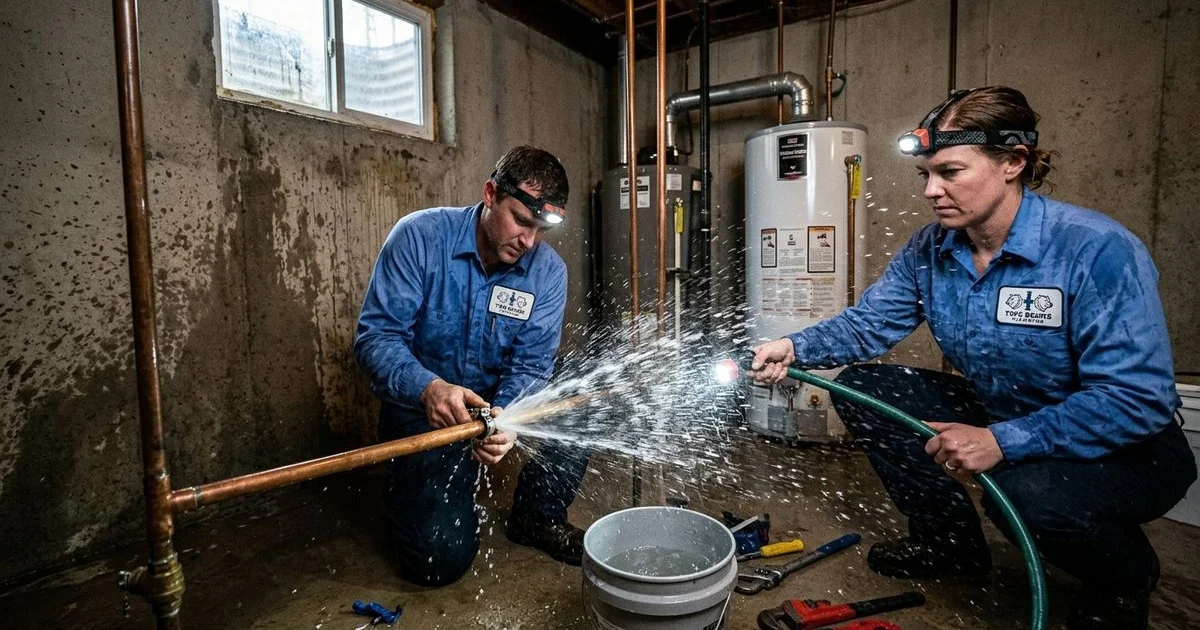
Every time my team walks into a flooded basement, the homeowner has the exact same look of panic. You see water pouring out of a ceiling or wall, and the immediate fear is the massive repair bill looming in the future. Recent 2026 data shows that the average water damage restoration in the Denver and Aurora area costs between $2,500 and $7,500.
Our crew knows that a rapid response is the only way to keep your final bill closer to the low end of that spectrum. This scenario plays out constantly during local winter weather. Aurora hits an average low of 19.4°F in January, creating severe freeze-thaw cycles that push residential plumbing to its breaking point.
Let’s break down the most critical steps to take right now, look at the underlying causes, and map out exactly what to do when a pipe bursts in your Aurora home.
Step 1: Shut Off the Water Immediately
Stopping the source is the absolute most critical action you must take. Every single minute that water continues to flow significantly increases the risk to your drywall, flooring, and electrical systems.
Your main water shut-off valve is typically located in the basement, near the front wall of the house where the water line enters from the street. Most older Aurora homes use a gate valve with a round handle, while newer builds feature a ball valve with a lever. Turn the round handle clockwise, or push the lever perpendicular to the pipe, to stop all water flow.
We highly recommend verifying your valve type right now. Gate valves that sit untouched for years often seize up and become impossible to turn during an emergency. Upgrading to a modern ball valve is a quick fix that guarantees a reliable shutoff.
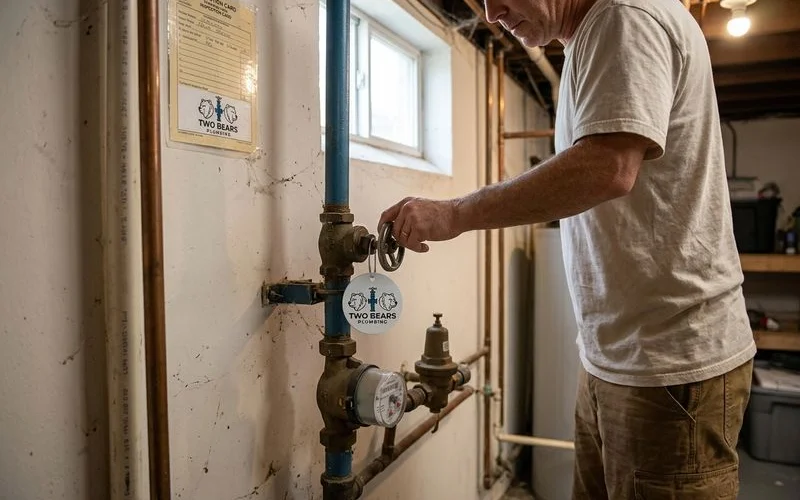
For ultimate protection, consider installing a smart water monitor like the Phyn Plus 2nd Generation or the Moen Flo. These devices sample your water pressure hundreds of times per second to detect abnormal flow rates. The system will automatically trigger a shutoff if a pipe bursts while you are at work or asleep.
Step 2: Open Faucets to Drain Remaining Water
After securing the main valve, your next priority is to open several faucets throughout the house. Turn on both the hot and the cold taps to relieve the built-up pressure in the system.
This simple action drains the remaining water trapped in the plumbing lines, which directly reduces the amount of water that can leak out of the ruptured section.
Our plumbers also advise checking your water heater immediately. If the break occurred on a hot water line, you must turn off the heating unit to prevent it from firing with an empty tank.
Here is a quick reference for shutting down different water heater types:
- Gas Water Heaters: Locate the control valve at the bottom and set the dial to the “pilot” position.
- Electric Water Heaters: Go to your main electrical panel and flip the dedicated breaker to the “off” position.
- Tankless Systems: Unplug the unit or shut off the power switch to prevent the heating elements from engaging.
Step 3: Contain the Water
While you wait for help to arrive, take aggressive steps to limit the spread of moisture. Fast action here protects your personal belongings and saves the structural integrity of your home.
We suggest gathering a wet-dry vacuum, mop, and large towels immediately.
Focus on these containment priorities:
- Place heavy-duty buckets directly under the active leak.
- Relocate wooden furniture, electronics, and porous valuables away from the affected zone.
- Extract standing water on hard floors using your wet-dry vacuum.
- Open doors and windows to increase airflow if the outside temperature is above freezing.
The Environmental Protection Agency (EPA) warns that mold spores begin germinating within just 24 to 48 hours after water exposure. Visible colonies can form in as little as three days if the ambient temperature sits between 77°F and 86°F.
Our team has seen minor leaks turn into full-scale remediation projects simply because the water sat for too long. Containing the mess immediately is the best way to avoid thousands of dollars in secondary mold damage.
Step 4: Document the Damage
Before hauling away ruined drywall or carpet, grab your smartphone and take extensive photos and videos. Visual proof from the exact moment of discovery is the strongest tool you have for your insurance claim.
Most homeowner policies cover this type of event, provided the break was not caused by obvious negligence or deferred maintenance. The Institute of Inspection, Cleaning and Restoration Certification (IICRC) categorizes a fresh burst supply line as “Category 1” clean water. Proving this early stage helps adjusters process your claim faster.
We highly recommend capturing a wide variety of evidence.
Make sure your documentation includes:
- Clear, well-lit photos of the ruptured pipe section.
- Wide shots showing the full extent of the pooled water.
- Close-ups of any damaged furniture, electronics, or personal items.
- Physical receipts for any emergency tarps, buckets, or wet-vacs you purchased.
Step 5: Call a Licensed Plumber
Once the immediate threat is contained, dial Two Bears Plumbing at (720) 704-2684 for emergency plumbing services. Our local crew provides 24/7 emergency response across Aurora, CO.
Clear communication with the dispatcher ensures the technician arrives prepared to fix the exact issue.
Be ready to share these specific details over the phone:
- The exact location of the leak (basement, second-floor bathroom, exterior wall).
- The visible pipe material (such as copper, grey CPVC, or flexible PEX).
- Confirmation that you successfully engaged the main shut-off valve.
- A rough estimate of how much standing water covers the floor.
Providing this quick summary allows the team to load the correct repair fittings and extraction tools before leaving the shop. This level of preparation translates directly into a faster, more efficient repair.
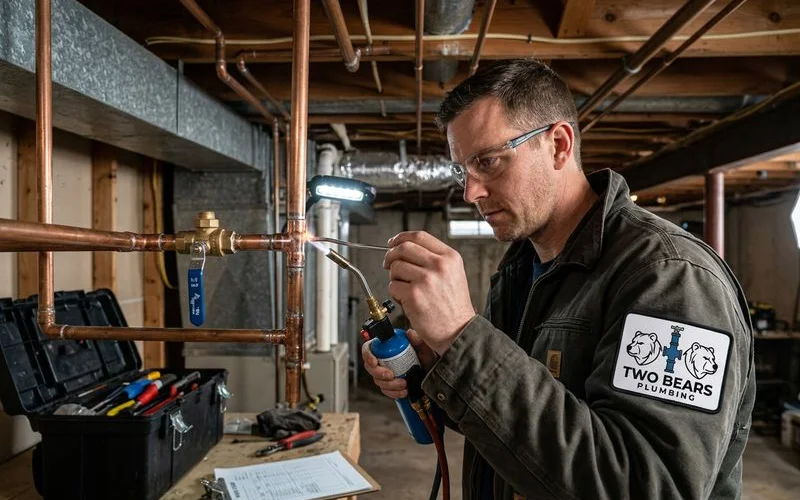
Why Pipes Burst in Aurora
Understanding the root cause of the failure is the first step toward long-term prevention.
Freezing Temperatures and Expansion
Water expands by roughly 9% when it freezes into ice. This simple physical reaction puts immense outward force on copper walls and plastic joints.
Our winter weather creates the perfect storm for this expansion. Aurora’s January climate averages a low of 19.4°F, which easily freezes uninsulated lines running through exterior walls, crawl spaces, and drafty garages.
Aging Copper and CPVC Lines
Many local subdivisions built during the 1970s and 1980s still rely on their original supply lines. These materials typically have a functional lifespan of 40 to 50 years.
We frequently see older CPVC pipes become dangerously brittle due to decades of exposure to the chlorine used in municipal water treatment. Hard water mineral deposits also eat away at original copper joints, creating microscopic pinholes that eventually rupture.
Sudden Pressure Surges
Water hammer is a loud banging noise caused by a sudden change in water direction. Fast-closing mechanisms, like washing machine solenoids or dishwasher valves, create violent shockwaves.
These repeated surges act like a hammer striking your plumbing joints from the inside. Over time, this constant mechanical stress forces weakened fittings to separate.
Excessive Municipal Water Pressure
Standard residential plumbing codes limit indoor water pressure to a maximum of 80 PSI. Aurora’s municipal supply can easily exceed this limit in certain downhill neighborhoods.
Our technicians test water pressure daily and often find homes operating at 90 or 100 PSI. If your home lacks a functioning Pressure Reducing Valve (PRV), that constant strain will eventually blow out a weak connection.
Preventing Future Burst Pipes
Once the immediate crisis is resolved, taking a few proactive steps can secure your system for the rest of the winter.
Focus on these preventative measures:
- Insulate exposed pipes: Add thick, R-3 rated foam pipe insulation to any exposed lines in your basement, garage, or crawl space.
- Let faucets drip: During cold snaps below 10°F, a slow drip keeps water moving and prevents ice blockages.
Check Your Pressure and Infrastructure
A high-quality Pressure Reducing Valve is your first line of defense against municipal surges.
We strongly suggest having a professional test your home’s incoming PSI at least once a year, because replacing a failing PRV is much cheaper than cleaning up a flooded basement.
Homes with original polybutylene piping, or aging copper that suffers from frequent pinhole leaks, are living on borrowed time. Scheduling a modern whole-home repipe using durable PEX material is often the smartest financial decision for older properties.
Two Bears Plumbing is ready to help Aurora homeowners 24 hours a day, 7 days a week. Keep our number handy at (720) 704-2684 and take five minutes right now to locate your main shut-off valve. Knowing exactly what to do when a pipe bursts in your Aurora home is the easiest way to protect your property from disaster.
Need Plumbing Help in Aurora?
Call now for same-day service. Upfront pricing, no hidden fees.
Call (720) 704-2684Related Service: Learn more about our emergency plumbing aurora →