6 Signs Your Main Sewer Line Is Clogged in Aurora
Multiple slow drains? Sewer smell? These 6 warning signs mean your main sewer line may be clogged — common in Aurora homes with aging clay pipes.

You already know that a plumbing backup is a massive inconvenience. We have watched how quickly a slow drain escalates into an expensive mess for property owners. The dividing line between a quick fix and a nightmare is usually the main sewer line.
Two Bears Plumbing started with a simple goal of being the plumber Aurora homeowners can trust when things go wrong. We know your time matters and your budget is tight. Data shows that the average home in Aurora is between 31 and 50 years old, which means many rely on aging vitrified clay pipes.
Our team will break down the 6 signs your main sewer line is clogged in Aurora and walk through the right ways to respond.
1. Multiple Drains Are Slow at the Same Time
A single slow drain usually means a localized clog in that fixture’s specific branch drain. The situation changes completely when your kitchen sink, bathroom sink, and bathtub all drain slowly at the same time.
We know this simultaneous slowdown indicates a downstream issue in the primary system. Your main line simply cannot handle the volume.
Pay attention to specific usage patterns in your home. A standard washing machine pumps out 15 to 30 gallons of water per load.
Our technicians frequently see that sudden volume overwhelm a partially blocked main pipe. The trapped water then takes the path of least resistance backward.
Watch for these specific plumbing interactions:
- Flushing a toilet causes water to appear in a nearby bathtub.
- Running the washing machine makes a bathroom toilet bubble or overflow.
- Using the kitchen sink results in slow drainage in a bathroom on the same floor.
- Taking a shower causes water to pool around a basement floor drain.
Testing Your Branch Lines
Isolating the issue prevents unnecessary panic. You can test your system by running water in the sink closest to the main sewer line exit.
We recommend checking the lowest point in your plumbing system first. If that lowest fixture drains perfectly fine while an upstairs sink backs up, you likely have a localized branch line clog rather than a main line emergency.
2. Gurgling Sounds from Drains or Toilets
A partial blockage in the main sewer line traps air inside your plumbing system. This trapped air forces its way backward to escape.
We frequently hear this described as a strange bubbling noise echoing from a toilet bowl. The escaping air pushes past the water seal in your fixtures.
Every drain in your home features a curved pipe called a P-trap. The water seal in a standard P-trap typically measures 2 to 4 inches deep.
Our plumbers know this specific design keeps toxic gases out of your living space. A severe clog creates negative pressure that completely siphons this water out.
The Warning Sounds
You should never ignore these strange noises. Listen closely to your plumbing system to identify the source of the pressure imbalance.
- Continuous bubbling: A constant sound from a toilet when no water is running indicates persistent negative pressure.
- Delayed gurgling: Hearing noises from a bathtub several seconds after flushing a nearby toilet points to a sluggish main line.
- Multiple fixture sounds: If turning on the kitchen faucet causes the powder room sink to vocalize, the common drain pipe is struggling.
The problem will not resolve on its own. We urge homeowners to schedule an inspection the moment these noises become a regular occurrence. Ignoring the sound often allows hazardous fumes to enter the house.
3. Water Backs Up in the Lowest Drain
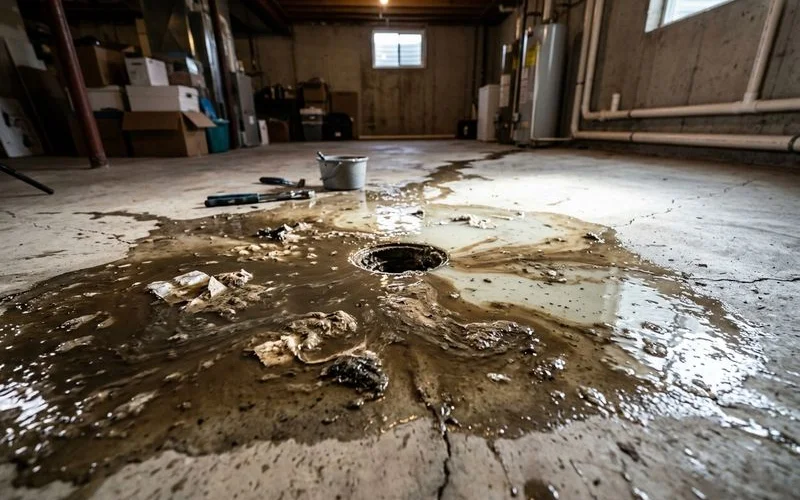
The basement floor drain serves as the lowest point in your entire plumbing network. It acts as the early warning system for your house.
We consider water seeping up through this specific drain to be undeniable evidence of a severe blockage. Wastewater takes the easiest path backward into your home.
This scenario is an absolute emergency. The Environmental Protection Agency categorizes raw sewage backups as Category 3 black water.
Our emergency teams treat these situations with extreme caution because this water contains hazardous pathogens and bacteria. You need immediate professional cleanup to prevent serious health risks.
Many homeowners mistakenly try to clean up Category 3 black water using household bleach. That approach remains extremely dangerous and completely ineffective.
| Material Type | Cleaning Recommendation | Why It Matters |
|---|---|---|
| Concrete Floors | Professional disinfection | Porous concrete can harbor bacteria if not treated correctly. |
| Drywall | Complete removal | Gypsum absorbs black water and grows black mold within 48 hours. |
| Carpeting | Immediate disposal | Sewage saturates the carpet pad, making it impossible to sanitize. |
Call Two Bears Plumbing at (720) 704-2684 for rapid drain and sewer services. We will dispatch a professional to diagnose the root cause immediately.
4. Sewer Smell in the Basement or Yard
A properly functioning sanitary system remains completely sealed and vents through your roof. Joints separate over time, which happens frequently with older vitrified clay pipes.
We often find that these separations allow noxious gases to leak directly into the surrounding soil. You might notice a foul odor lingering near your foundation or hovering over your yard.
That rotten egg smell comes from hydrogen sulfide. The human nose detects this gas at levels as low as 0.01 parts per million.
Our safety protocols dictate treating persistent odors seriously. The gas mixture also contains methane, making it highly flammable in enclosed spaces.
Common Sources of Odors
Before assuming the worst, you should check for simple fixes. Sometimes the issue is not a collapsed pipe, but rather a neglected component inside the house.
- Dry floor drains: The P-trap in a basement floor drain can evaporate. Pour a gallon of water down the grate to restore the seal.
- Blocked vent stacks: Bird nests or leaves can clog the roof vent, forcing gas back down.
- Loose cleanout caps: A cracked or improperly sealed cleanout plug lets fumes escape directly into the utility room.
Prolonged exposure to these fumes causes headaches, nausea, and respiratory irritation. We strongly advise calling for a professional inspection if the smell persists after refilling your drain traps.
5. Lush Patches of Grass Over the Sewer Line
A sudden bright green strip of grass in your yard rarely signals exceptional landscaping. Sewage contains rich amounts of nitrogen and phosphorus.
We recognize these lush patches as a classic symptom of an underground leak. The cracked pipe acts as a direct fertilizer feed for your lawn.
Homeowners easily overlook this warning sign because the grass actually looks fantastic. The reality beneath the soil threatens your property.
Our inspection teams know that a failing pipe eventually leads to a complete structural collapse. The surrounding dirt washes away into the broken line, creating dangerous hollow voids.
Visual Clues in Your Yard
You need to inspect the area closely if you spot unusually vibrant vegetation.
- Soil subsidence: Look for a subtle trench or sunken depression forming directly above the green patch.
- Constant moisture: The ground might feel spongy or muddy even during dry Colorado summers.
- Foul odors: A faint smell of sulfur will often accompany the rapid plant growth.
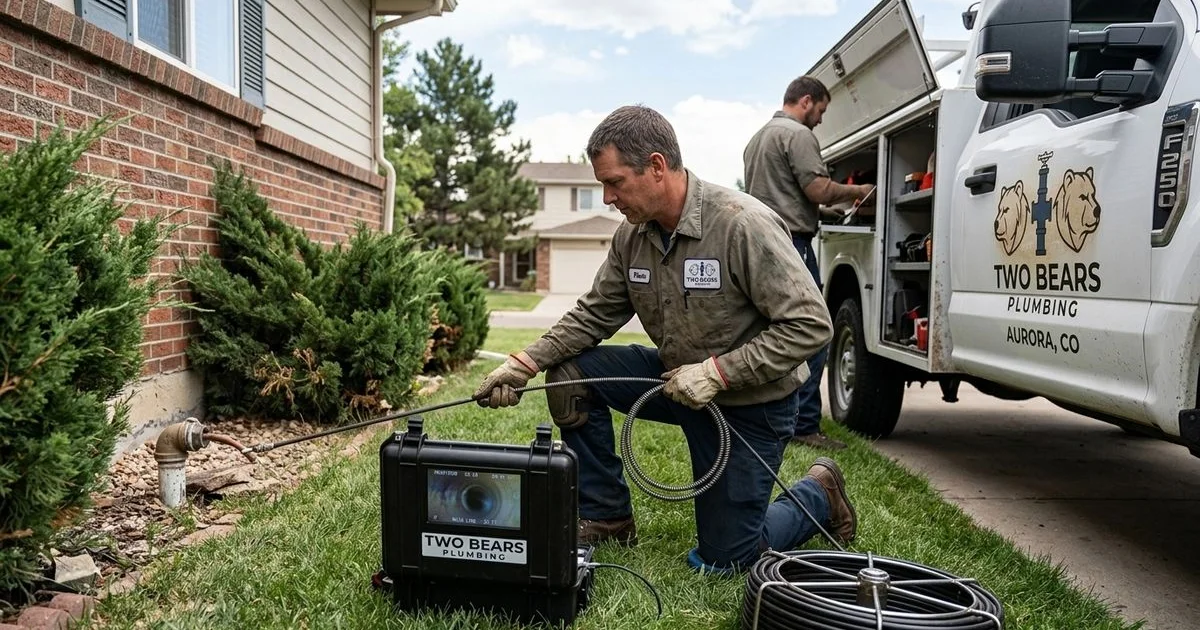
Do not wait for a sinkhole to develop in your front lawn. We can perform a high-definition camera inspection through your cleanout to reveal the exact condition of the buried infrastructure.
6. Recurring Clogs Despite Clearing
Clearing the same stubborn drain every few months means the fundamental issue remains unresolved. Store-bought chemical products like Drano or Liquid Plumr only provide a temporary illusion of success.
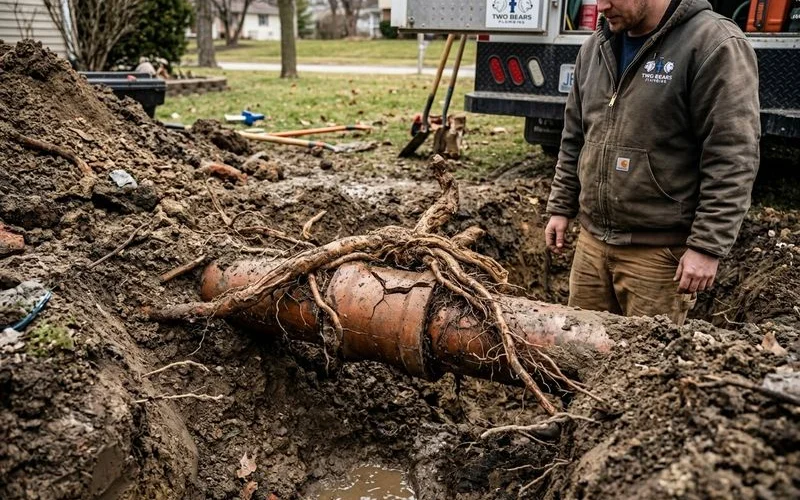
We constantly warn customers that these products push the actual blockage deeper into the system. The harsh chemicals fail to eliminate tree roots or repair a bellied pipe.
Most liquid drain cleaners rely on caustic ingredients like sodium hydroxide. These chemicals create intense exothermic heat to melt organic matter.
Our repair crews frequently replace sections of cast iron and PVC pipes warped or corroded by repeated chemical use.
The Problem with Basic Snaking
Running a basic mechanical snake down a main line offers another temporary fix. The spinning cable typically just punches a narrow hole straight through a dense root mass.
The water flows again, but the roots remain firmly attached to the pipe walls. They simply grow back thicker and cause another backup within three to six months.
A professional video inspection shows us exactly what obstructs the flow. We can then recommend a permanent solution based on hard evidence.
| Repair Method | Best Used For | Expected Result |
|---|---|---|
| Hydro-Jetting | Heavy grease and minor root intrusion | Clears the pipe back to its original internal diameter. |
| CIPP Pipe Lining | Cracked or aging clay pipes | Creates a seamless, root-proof pipe within the old one. |
| Full Replacement | Collapsed or severely bellied lines | Provides a brand-new, structurally sound drainage system. |
What Causes Main Sewer Line Clogs in Aurora?
The unique soil composition and historical building practices in the Denver metro area create a perfect storm for plumbing failures. We regularly encounter the same four primary culprits when responding to emergency calls.
- Tree Root Intrusion: Roots instinctively seek out the warm moisture leaking from the joints of older clay pipes. They infiltrate the tiny gaps, expand rapidly, and form a dense net that traps passing debris.
- Material Deterioration: Historic pipe materials have a definite expiration date. Cast iron rusts from the inside out after 50 years, while Orangeburg pipe (made of compressed tar paper and wood fiber) completely collapses.
- Bellied Pipes: Aurora is famous for its expansive clay soils, which swell when wet and shrink when dry. This constant shifting creates sagging low points, or “bellies,” where solid waste accumulates instead of flowing downhill.
- Grease and Scale: Pouring hot cooking oil down the sink coats the interior walls of the pipe as it cools. Over decades, this sticky layer solidifies, catching soap scum and reducing the pipe’s diameter until nothing can pass through.
What to Do About the 6 Signs Your Main Sewer Line Is Clogged in Aurora
Panic often leads to costly mistakes. You should avoid chemical drain cleaners entirely when dealing with a suspected main line issue.
We strongly advise taking immediate, calculated steps to limit the damage to your property.
- Stop running all water immediately. Turn off the washing machine, avoid flushing toilets, and instruct your family to stop using the sinks.
- Locate your sewer cleanout. Look for a 3-inch or 4-inch white or black PVC cap. You will typically find it in the basement, in a crawlspace, or outside near the foundation bushes.
- Call a licensed professional. Contact our dispatch at (720) 704-2684.
Two Bears Plumbing provides fast drain and sewer services across Aurora, CO. Our crews handle everything from high-pressure hydro-jetting to advanced trenchless sewer repair.
Understand the Value of a Camera Inspection
A standard residential sewer camera inspection in Colorado typically averages between $300 and $500 in 2026. This diagnostic tool serves as the best investment you can make for your home.
We use a high-resolution fiber-optic camera to show you the exact condition of the pipe in real-time. You get a clear, flat-rate quote based on verifiable facts rather than guesswork.
Ignoring the 6 signs your main sewer line is clogged in Aurora guarantees a much higher repair bill later. Catching the problem early allows for less invasive repairs like pipe lining. Call us today to schedule your assessment and protect your property.
Need Plumbing Help in Aurora?
Call now for same-day service. Upfront pricing, no hidden fees.
Call (720) 704-2684Related Service: Learn more about our drain cleaning aurora →